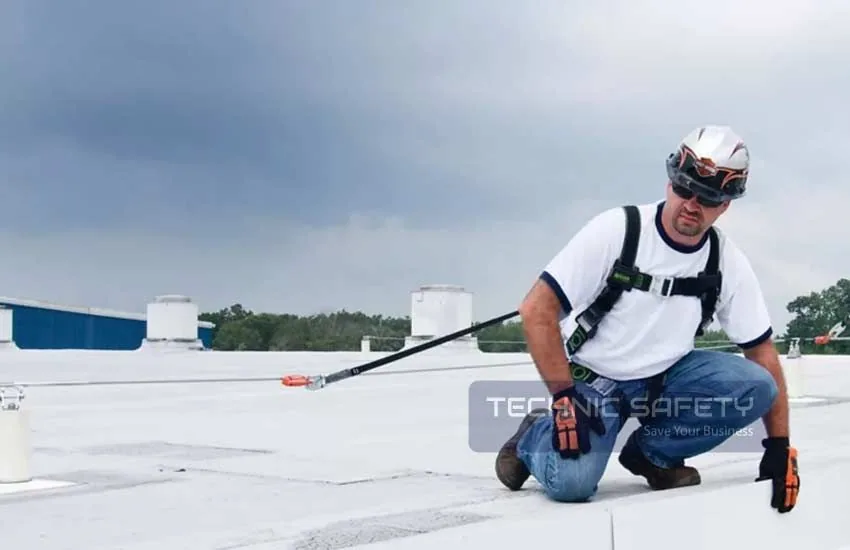
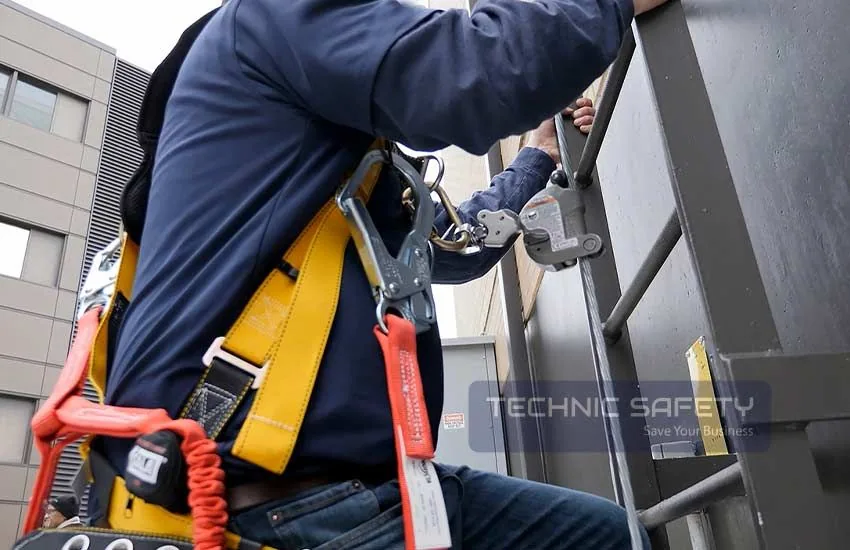
A lifeline connects a worker's full body harness to an anchor system fixed to the structure and arrests a fall. This section covers the horizontal and vertical lifelines mounted permanently on a building: which line suits which way of working, what the system consists of, and what to check before choosing.
A lifeline is a system, not a single product: anchor bracket, stainless steel rope or rail, trolley, shock absorber, tensioning and end fittings, and the user's personal protective equipment. It is only as reliable as its weakest part, so components must be compatible, compliant with the relevant standards, and installed to a design prepared for the structure.
Horizontal or vertical?
The choice follows how the worker moves. A horizontal lifeline suits roofs, terraces, warehouses and platforms, where travel is lateral and the user stays attached while crossing the area. A vertical lifeline is used on fixed ladders, towers, poles and chimneys that must be climbed; the guided type rope grab follows the user and locks in a fall. For short term work that changes location, a removable mobile lifeline may fit better.
Choosing the right line
- Direction of movement: lateral travel, climbing, or a route combining both.
- Supporting structure: condition and strength of the concrete or steel that carries the anchor.
- Fall clearance: free space below the user for the system to arrest the fall.
- Simultaneous users: how many the line carries safely is set by static calculation.
- Environment: stainless components that resist moisture and corrosion on facades.
- Standards: EN 795 for anchor systems, EN 353 for guided type fall arresters on vertical lines.
Installation, use and inspection
A lifeline protects only when installed and used correctly. The site is surveyed, the route and anchor points engineered, the installation carried out by an experienced team, and the documentation handed to the employer. Occupational Health and Safety Law No. 6331 and the Regulation on Occupational Health and Safety in Construction Works place the duty of collective and personal protective measures at height on the employer. Ensuring the line's users have completed working at height training, inspecting the system periodically, and withdrawing any component that has arrested a fall are inseparable parts of that duty. Share your site conditions and we can assess the suitable line type together.